

Public lighting
Residential development lighting
In a residential development, light accompanies the way to each home and orders the spaces that are shared. It is planned together with the road, the footway and the surroundings.
The starting point
The footway counts too.
A residential road is travelled on foot and by car. Light serves both scales and orders the way into each home.
- Roads
- Footways
- Handover
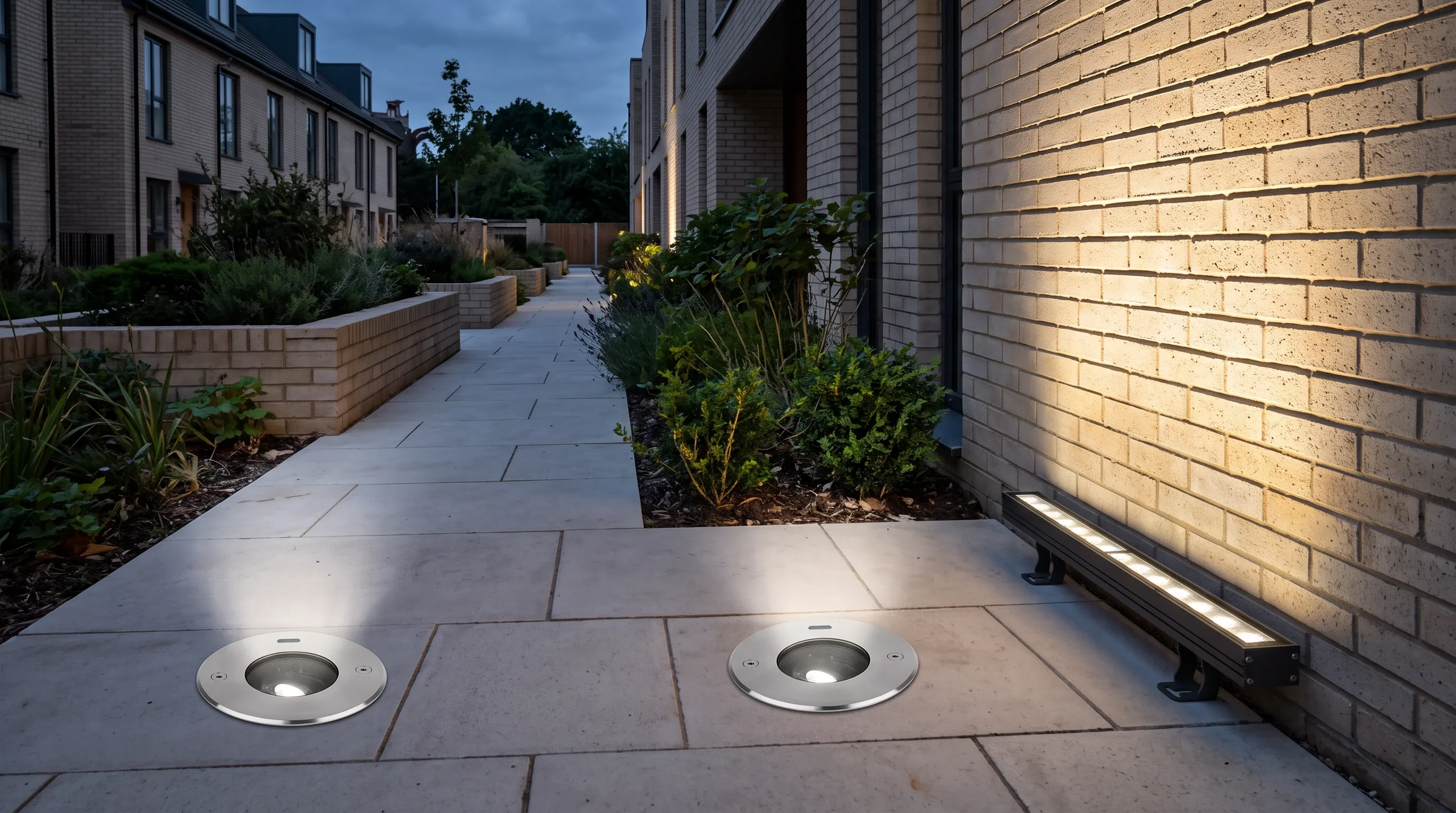
What is lit
Access roads, footways and shared spaces are the base. Entrances to homes, internal junctions and places to stop or garden areas are added to them.
A development is travelled on foot and by car. Both scales coexist, and the lighting has to serve both without filling every corner with luminaires.
What the project decides
The road layout, ground levels, trees and the position of the homes define where each luminaire can go. So does the image the development wants to project from the street.
Maintenance and delivery phases matter from the start. A development handed over in stages needs lighting that works in each one.
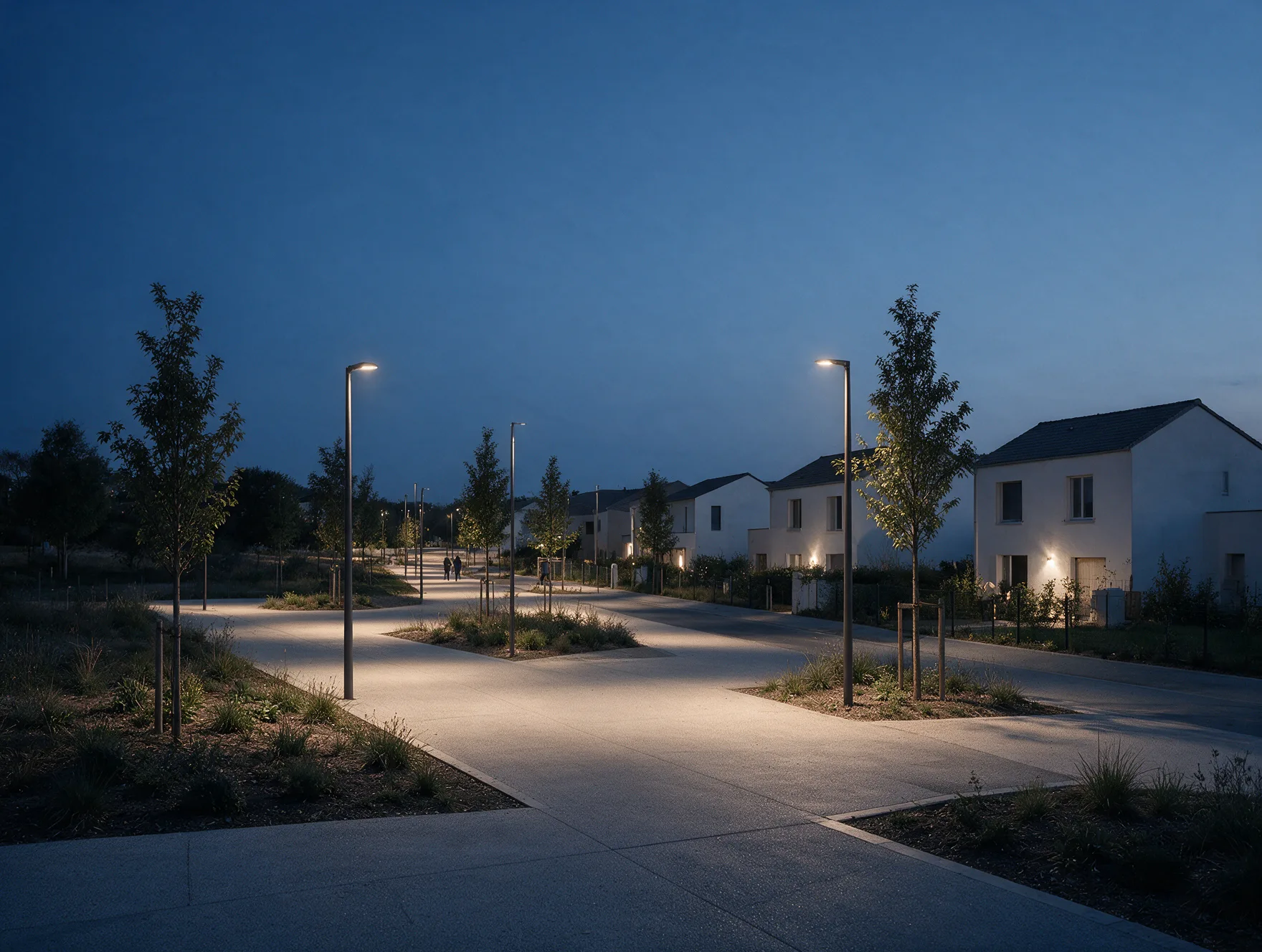
The development is perceived the same by day and by night: light should not change what the place is.
How it is approached
The work starts from the development plan, the intended uses and existing easements. Main routes are identified, along with the points that should not be lit.
Alternatives are compared for how they fit the surroundings and how easy they are to maintain, not only for how they look on the first night.
What to avoid
- Repeating the same luminaire along every road, lighting private gardens from shared space, and leaving maintenance until handover.
- It is also worth avoiding a night image that bears no relation to the daytime one: the development is perceived in the same way by day and by night.
From the road to handover.
Real Conalux catalogue pages. The choice is defined with the project's technical team.
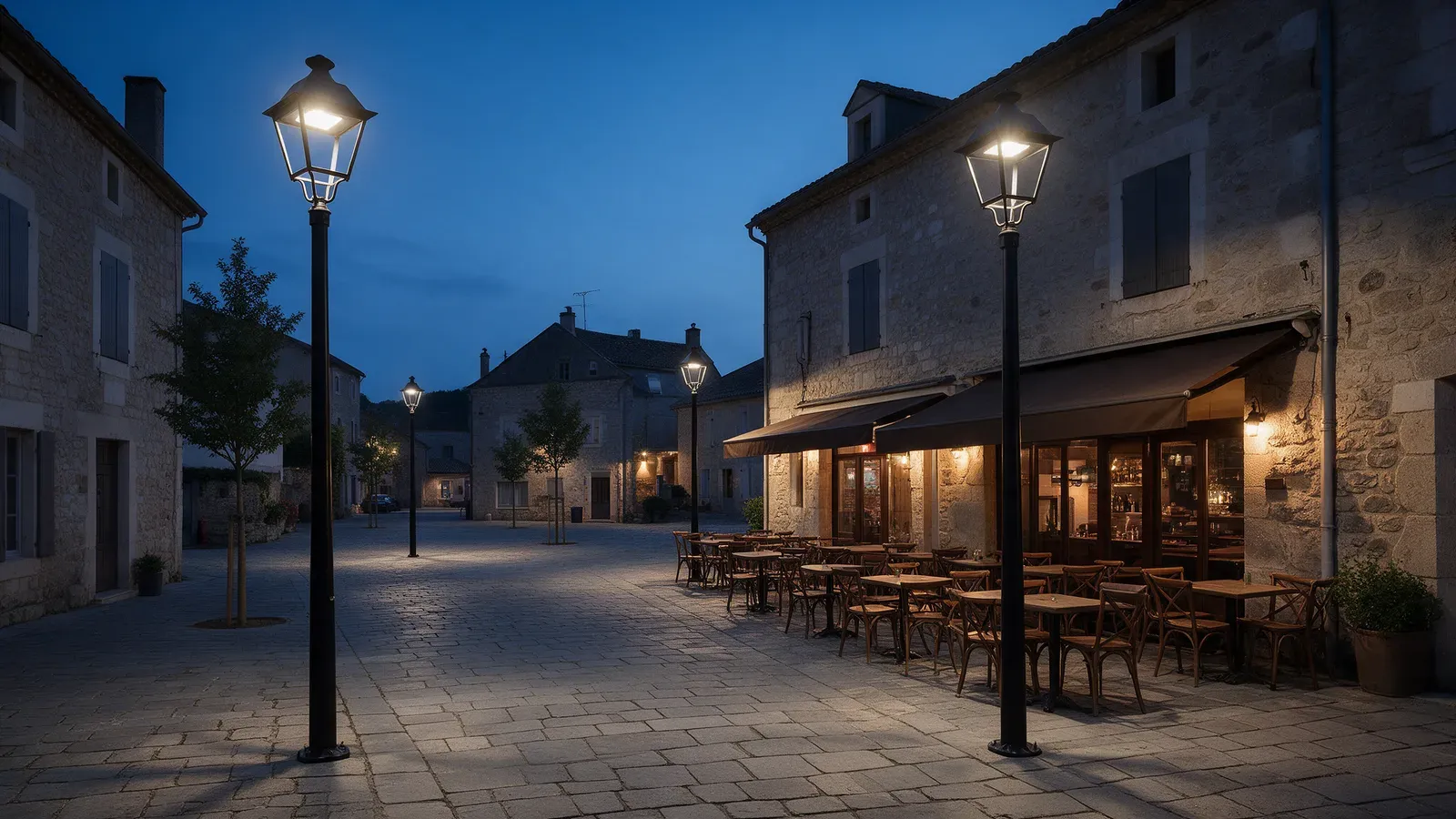
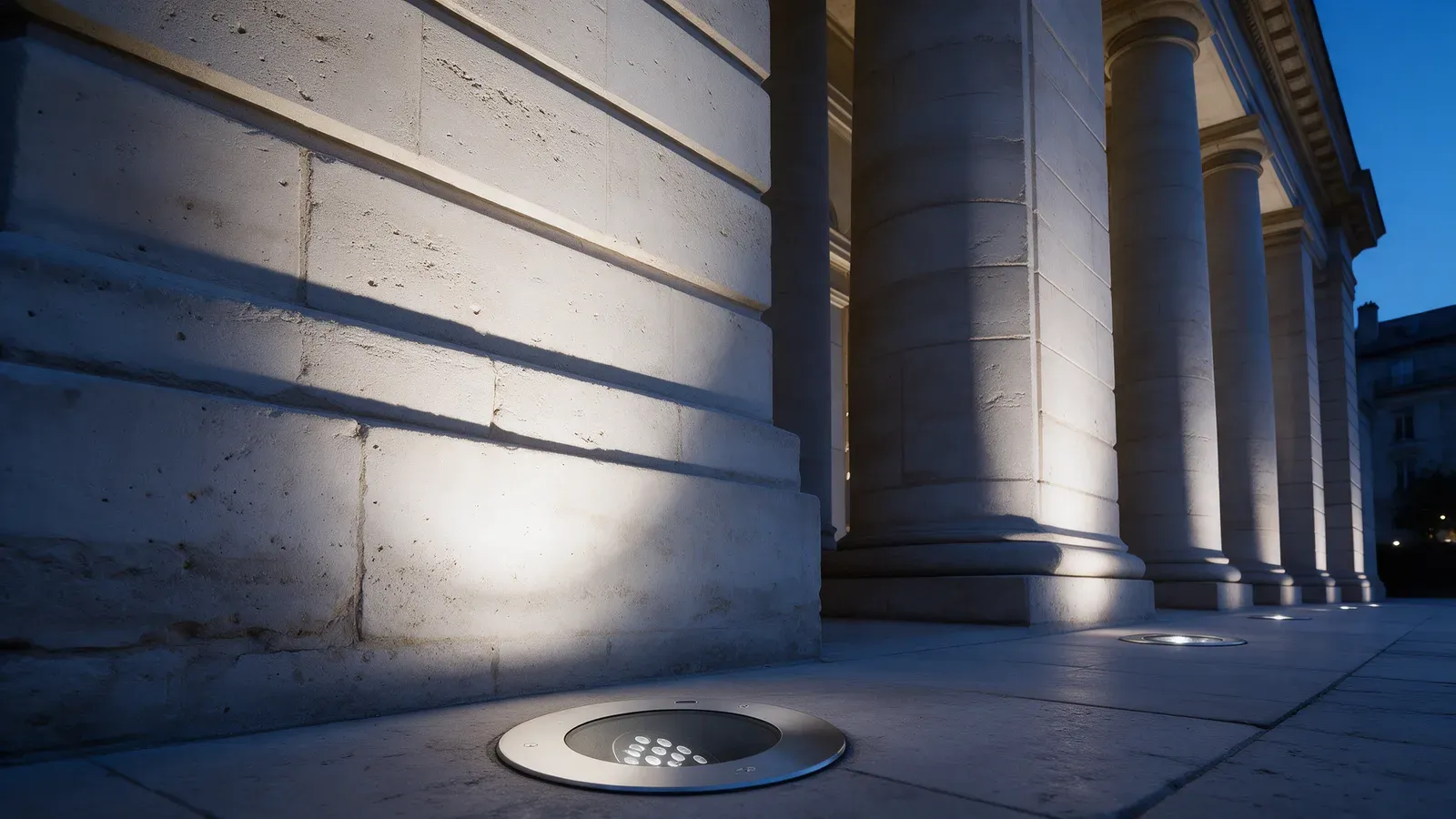
Your site. Its uses. The starting point.
Local authorities, lighting consultants and developers: explore Conalux’s solutions and project support to prepare your lighting brief.
Context, plan and uses
Gather the site context, an available plan and the uses that need to be considered.
Lighting criteria
Set out routes, surroundings, operating hours and comfort expectations to examine.
Solutions to validate
Compare possible directions and take them through the necessary project validations before deciding.
Frequently asked questions
What information should be gathered to start?
The development plan, intended uses, delivery phases and the constraints of the surroundings: trees, easements and accesses.
Can it be planned in phases?
Yes. Delivery phases are part of the project and determine what must work at each point and what can be left prepared.
How does it fit with gardens and homes?
The position of luminaires and the aim of the light are defined together with the road layout and the position of the homes, so private space is not invaded.
From the development plan to handover
Conalux brings together the solutions and advice to prepare the lighting for your residential development.
Explore Conalux solutions